By Harpreet Ahuja
Author’s Note: The framework I explore comes from the Conscious Use of Power course at Inner Activist, which draws inspiration and guidance from Leticia Nieto’s work.
Navigating the Upside Down
The world has gone awry. I open my news app and misery is the only thing on the menu. In fact, I am reminded of the Upside Down in Stranger Things, a Netflix series, where everything is recognizable but fundamentally wrong. We watch an ongoing genocide, the kidnapping and terrorizing of civilians, nonsensical shootings by law enforcement, and the neo-colonial takeover of sovereign states—all unfolding in real-time. I feel dread, despair, and sadness, so I begin to wonder: How is there still room to debate the “validity” of such obvious cruelty?
A broken compass
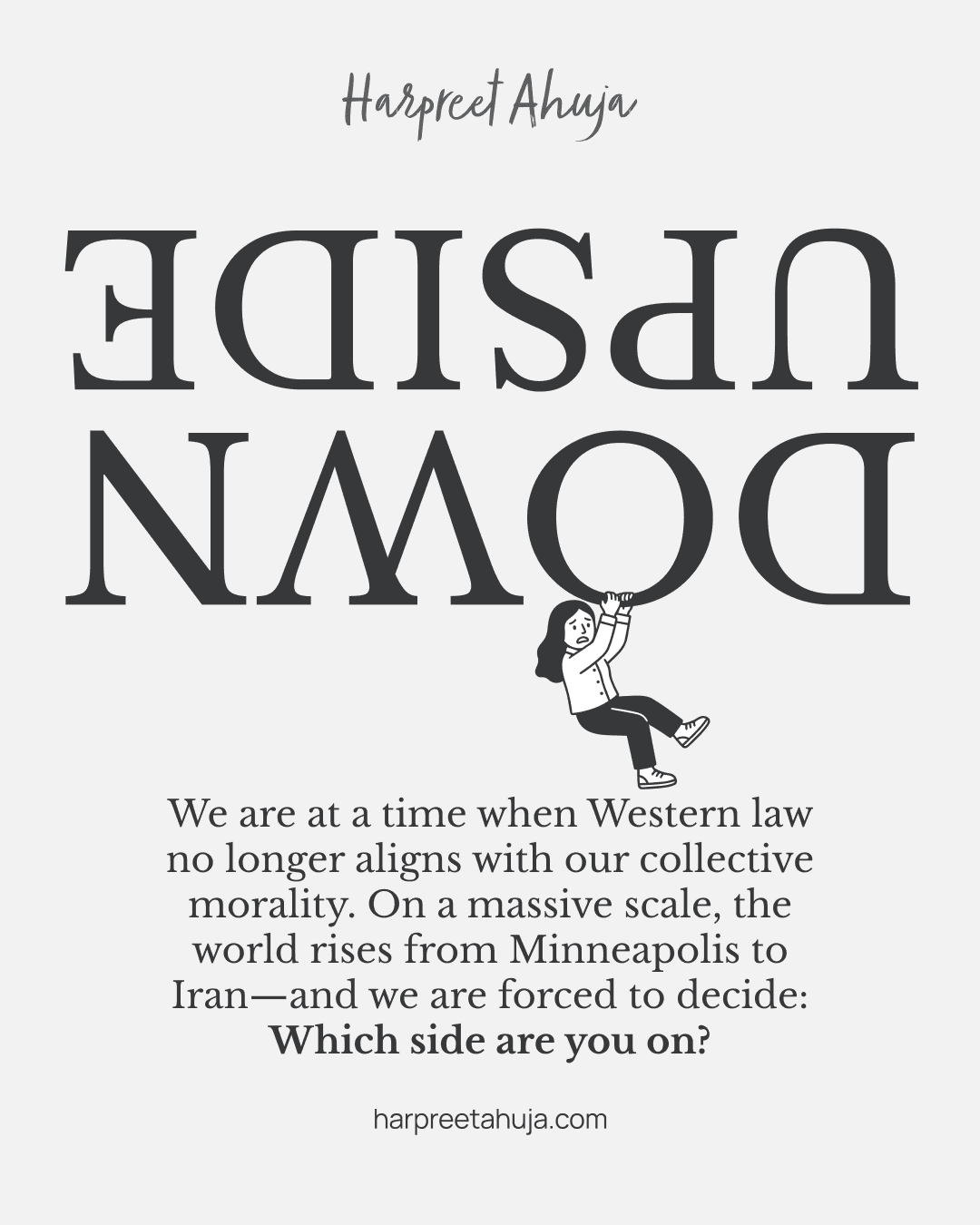
This sense of inversion is rooted in a fundamental disconnect. As Josh Johnson, an American stand-up comedian and writer, recently articulated about the legal justification for the shooting of Renee Good by an ICE agent, we are at a time when Western law no longer aligns with our collective morality. Barely seventeen days later, Alex Pretti, an ICU nurse, was defending a woman when two ICE agents fired ten shots, killing him—another act that tested the limits of legal justification. The legal system we once relied on to define right and wrong has drifted away from the public interest. Johnson’s assessment is spot on: if we rely on our domestic and international legal systems as they stand to guide us, we will find ourselves in a circle of corruption.
The resulting erosion is accelerated by political figures like President Trump, who openly defies the system to bend it to his will—undermining the judiciary’s independence by attacking judges and court rulings that contradict his agenda. Beyond the domestic realm, we are also witnessing those in positions of power around the world codifying their complicity in genocide. A stark example is the invitation by President Trump and subsequent acceptance by thirty-five nation-states to join the “Board of Peace” to rebuild Gaza. This proposal for “reconstruction” comes even as a genocide and ecocide of the Palestinian people and their territory continues with the full backing of the United States, illustrating a profound misalignment between “legal peace” and moral reality on the ground.
As our world tilts into the Upside Down, people around the globe are resisting, even knowingly putting themselves in death’s way. On a massive scale, the world rises from Minneapolis to Iran—and we are forced to decide: Which side are you on?
Power and context
While this question appears simple, many people feel overwhelmed when grappling with the responsibility of taking a stand. This sense of helplessness often manifests in three distinct ways:
Indifference: “I cannot have an opinion because I need to educate myself on the topic,” yet this person never seeks out the information.
Distance: “This issue doesn’t affect me and I’m not sure what to do, so I’m just going to stay out of the conversation entirely.”
Neutrality or Silence: “I see valid points on both sides, so I am choosing not to support either party.” This choice often masks a refusal to engage with power dynamics. It is complemented by linguistic silence, the use of the passive voice, where one says “Mistakes were made” or “Palestinians died” instead of “The Israel Defense Forces killed Palestinians.” By removing the subject, the speaker remains silent on who is responsible.
Not taking a position only perpetuates inequality and upholds the status quo. As anti-apartheid activist Desmond Tutu cautioned, this mindset is dangerous: “If you are neutral in situations of injustice, you have chosen the side of the oppressor.”
Navigating this choice, however, can be difficult because power and oppression are inherently complex. Though our brains prefer to categorize and impose binaries of “this or that” and “us or them,” this reductionism does not account for the context in which we operate.
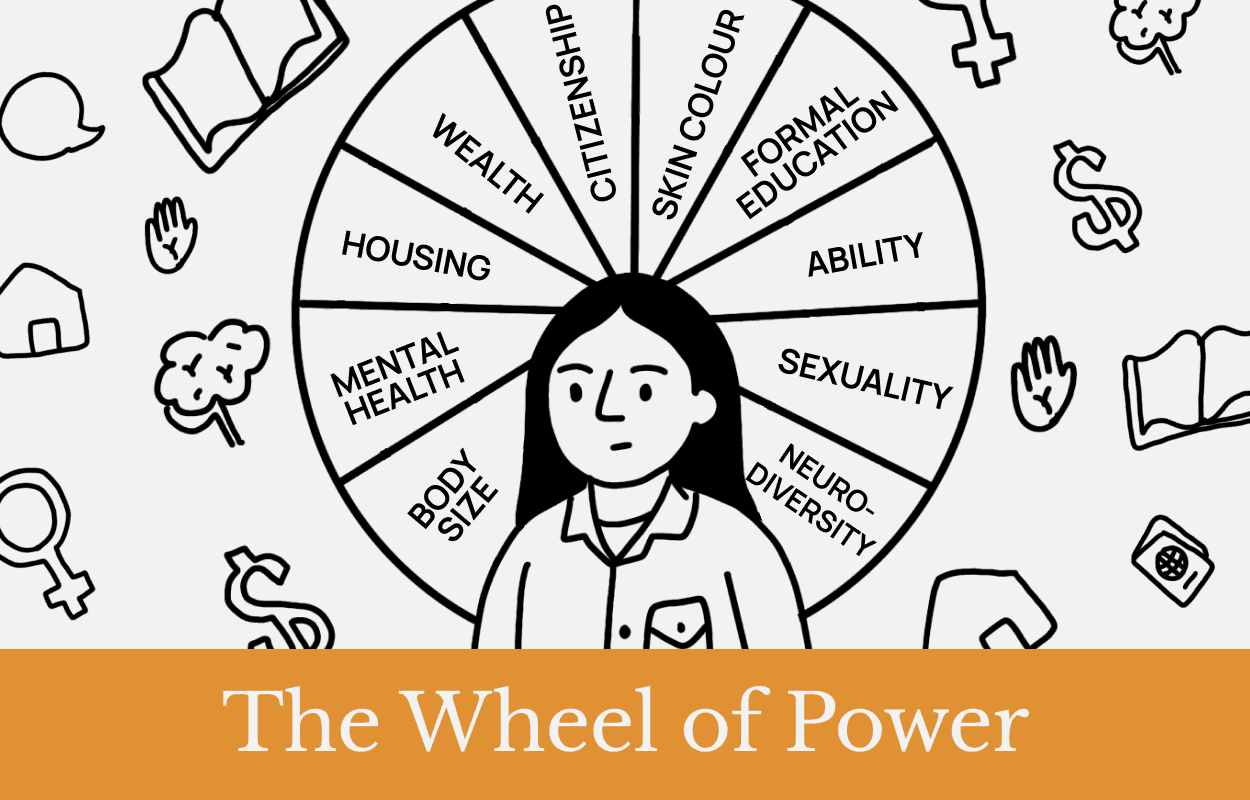
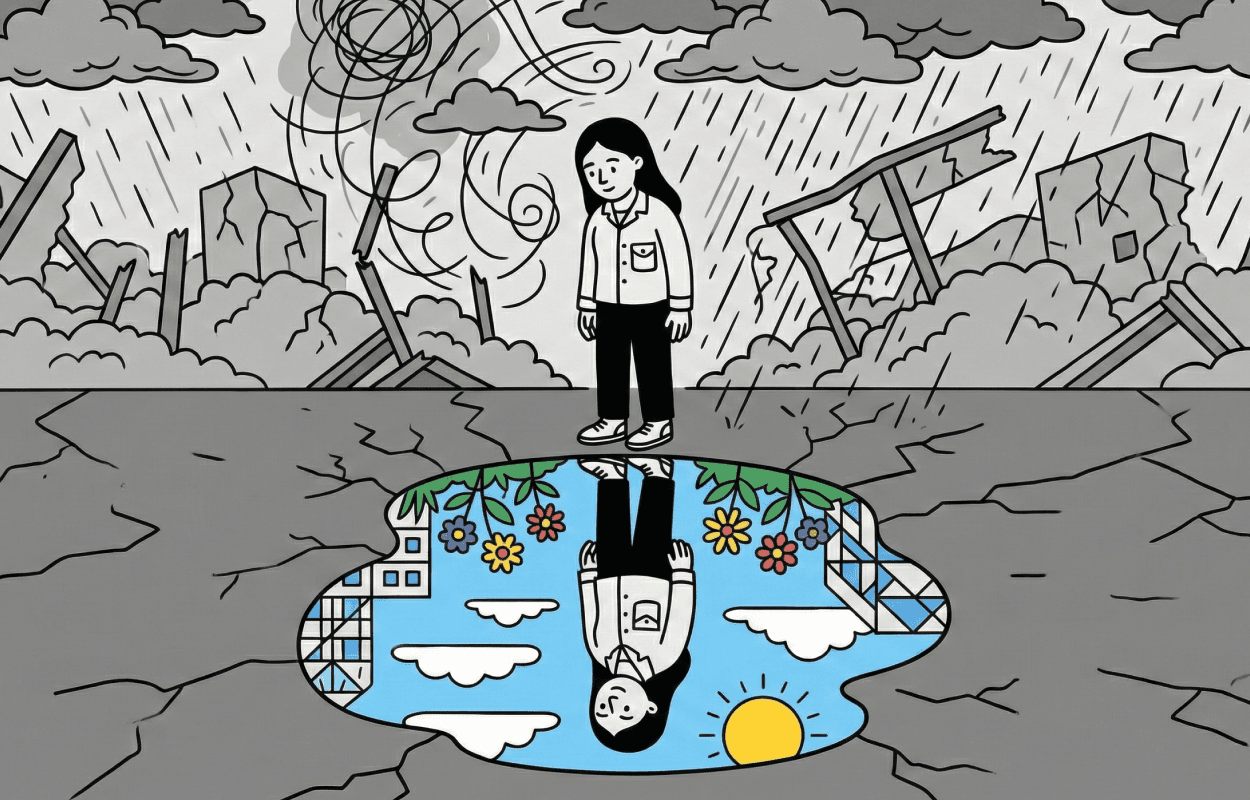
A more thorough analysis asks: In my current space, in what ways do I hold power, and in what ways do I lack it?
By recognizing that our power is context-dependent, we can enter situations knowing when to step up, when to step back, and when someone else should step in alongside us. Stepping back isn’t an act of indifference, distance, or neutrality when it is a strategic move meant to clear the path for someone else’s power.
Strategizing your stance
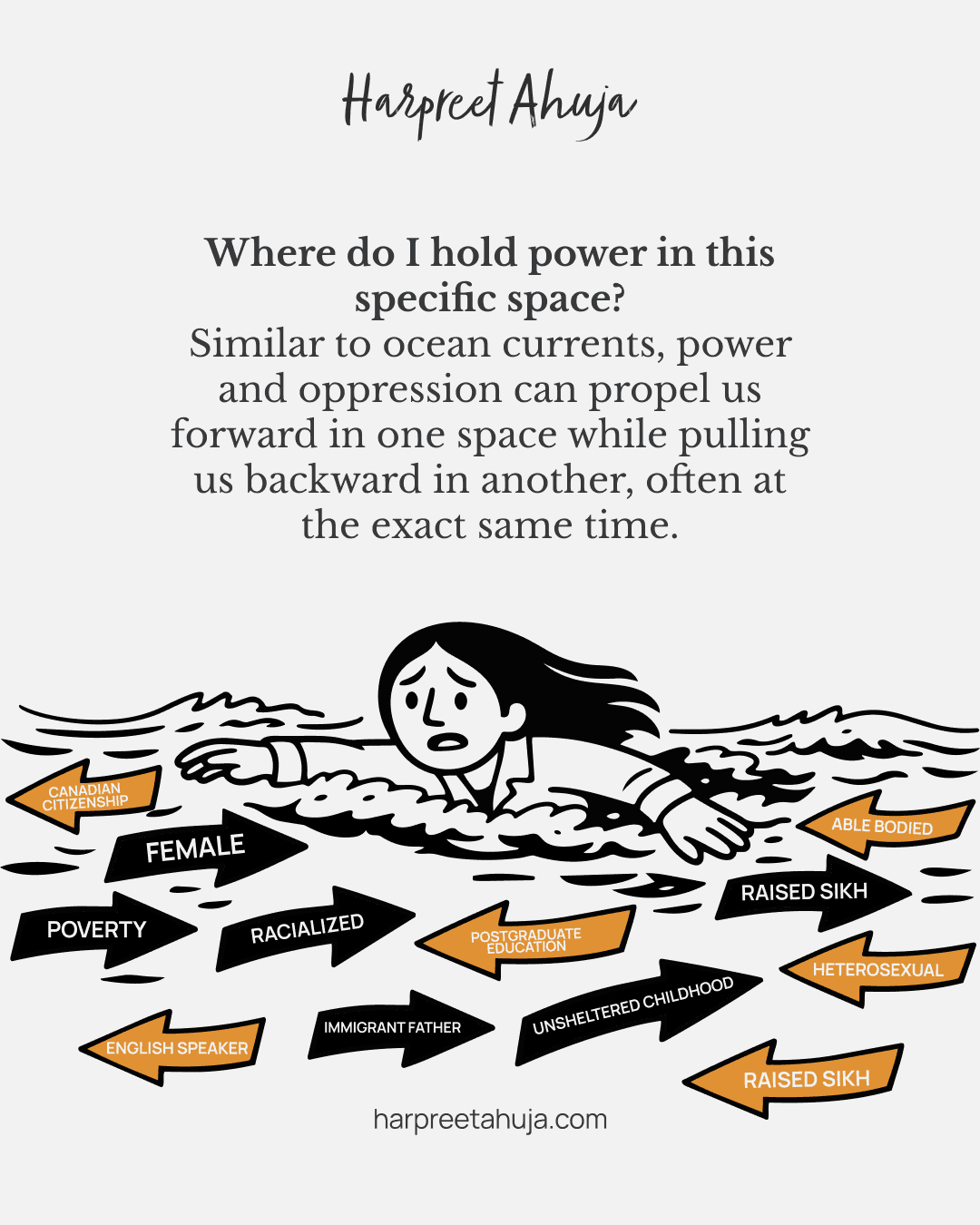
Similar to ocean currents, power and oppression are multi-directional. We gain momentum when we navigate these currents strategically, but if we ignore them, we risk getting battered by the waves. These currents are complex; they can propel us forward in one space while pulling us backward in another, often at the exact same time. For instance, an asylum-seeker awaiting a status determination would be vulnerable at a protest with police presence; yet, that same individual might hold significant power as a panelist on an academic committee discussing the ethics of citizenship. While the individual as an asylum-seeker lacks formal power (legal status), they possess moral and epistemic power (the power of knowing the truth of a system) that the academic committee lacks.
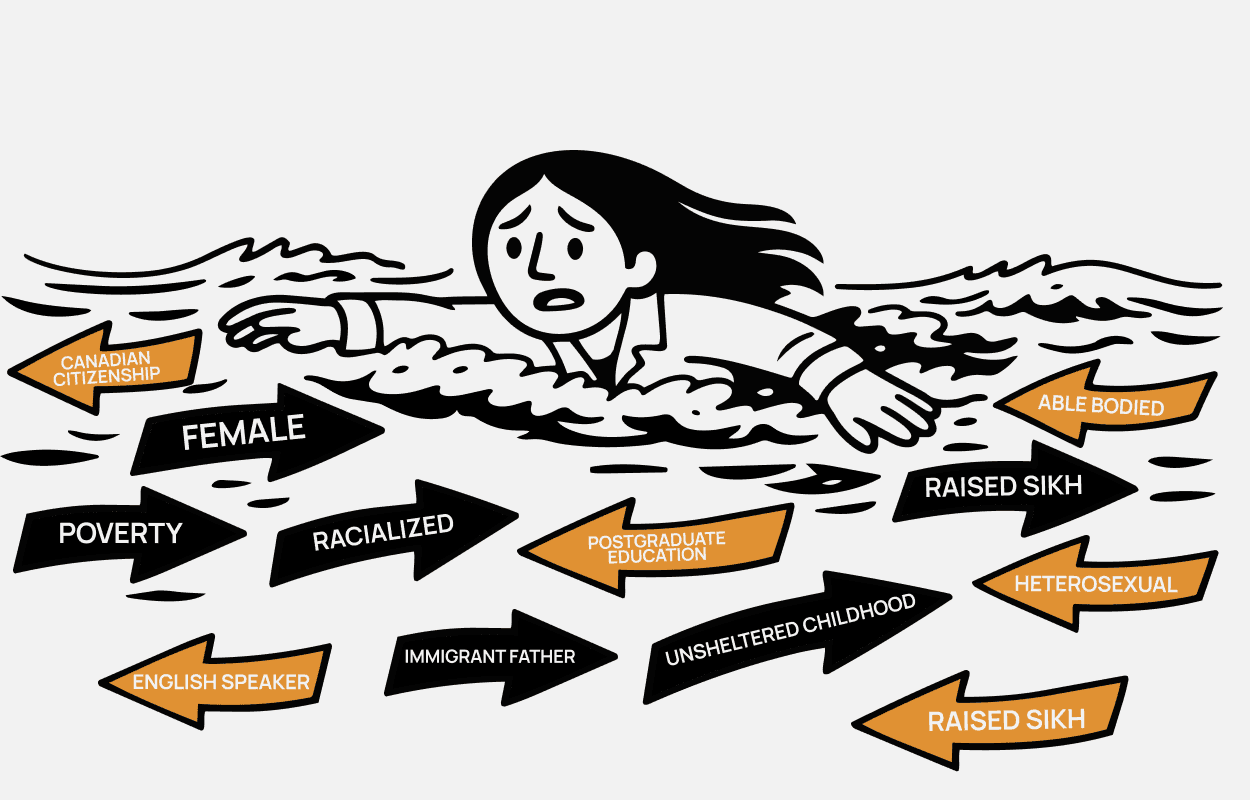
By asking, Where do I hold power in this specific space? taking a stand becomes a clear, navigable act. From moment to moment, this inquiry allows us to use our full range of skills.
When we recognize the power we hold, we become more aware of unfair power dynamics. By understanding rank systems (who holds power and privilege) and building personal relationships with targeted groups, we can leverage our standing to dismantle barriers. Ultimately, this allows us to center the voices of those most affected by structural violence and inequity.
Owning your power
When I was a young girl, I did not have much power. Growing up in Québec during the separatist movement, amidst anti-immigrant and anti-anglophone sentiment, I remember being targeted by my teachers because of the identities that I held. By my late twenties, however, my context had shifted: I became a lawyer. Had I not internally updated my self-perception to acknowledge this new privilege, I would have remained trapped in the mindset of that powerless girl, unable to recognize the agency I now possess to effect change.
My social and professional positions were no longer the same, but I still experienced an “identity lag.” It wasn’t an easy, immediate transition. Although my circumstances had improved, my mind was on rewind, holding me back from processing the present and the possibilities of the future. I was still scared, living in deep survival mode, unable to fully digest that my self-perception was lagging behind my reality. Closing the gap meant I had to do some heavy lifting and face my deepest fears. Slowly, with each new day, I began to replace the heaviness of my past with the lightness of my existing circumstances. With the open space I now hold, I have room to decide strategically how I can direct my power to create openings for other people.
Re-aligning your compass
Today, look at the spaces you inhabit—your workplace, your community, your kitchen table—and use these five questions to uncover the power you already hold:
When I look at the Upside Down of my political landscape, which response do I usually default to: indifference, distance, or neutrality?
Where am I still acting like the person I used to be, and what could happen if I started acting like the person I am now?
In the specific spaces I will enter this week (e.g., a meeting, a family dinner, a community event), where do I hold power or privilege (high rank), and in what ways do I experience marginalization or disadvantage (low rank)?
When using my high rank, am I speaking for others, or am I using my power to work alongside and clear the path for them?
What is one small, strategic move I can make tomorrow to bring my actions into alignment with my morality, rather than conforming to the ‘broken compass’ of the system?
Answering these questions honestly requires the courage to dissect ourselves, without judgment. By updating our self-perception and recognizing where we have power, we can reset our compass, step forward into action, and hold our political leaders accountable. We cannot control the systemic currents around us, but we can always control where we position ourselves.
Meet Harpreet: Harpreet Ahuja is a lawyer, human rights consultant, and social justice advocate driven by the conviction that systems need reimagining. Her work explores the intersection of law, policy, and lived experience—and tells the human stories behind injustice. Harpreet is based in Vancouver on the traditional, ancestral and unceded territories of the xʷməθkʷəy̓əm (Musqueam), Sḵwx̱wú7mesh (Squamish), and səlilwətaɬ (Tsleil-Waututh) Nations, and publishes on her website.