By Harpreet Ahuja
“You never make the payments. Now, we’re going to get evicted AGAIN!”
Another dinner plate hit the wall, showering the kitchen floor with a hundred little pieces. I hopped, like a game of hopscotch, trying to keep the smallest shards from piercing my bare feet.
I grew up watching my parents navigate a chaotic environment the only way they knew how. It took me years to see that their way of speaking had carried over into my own life. That realization changed everything for me.
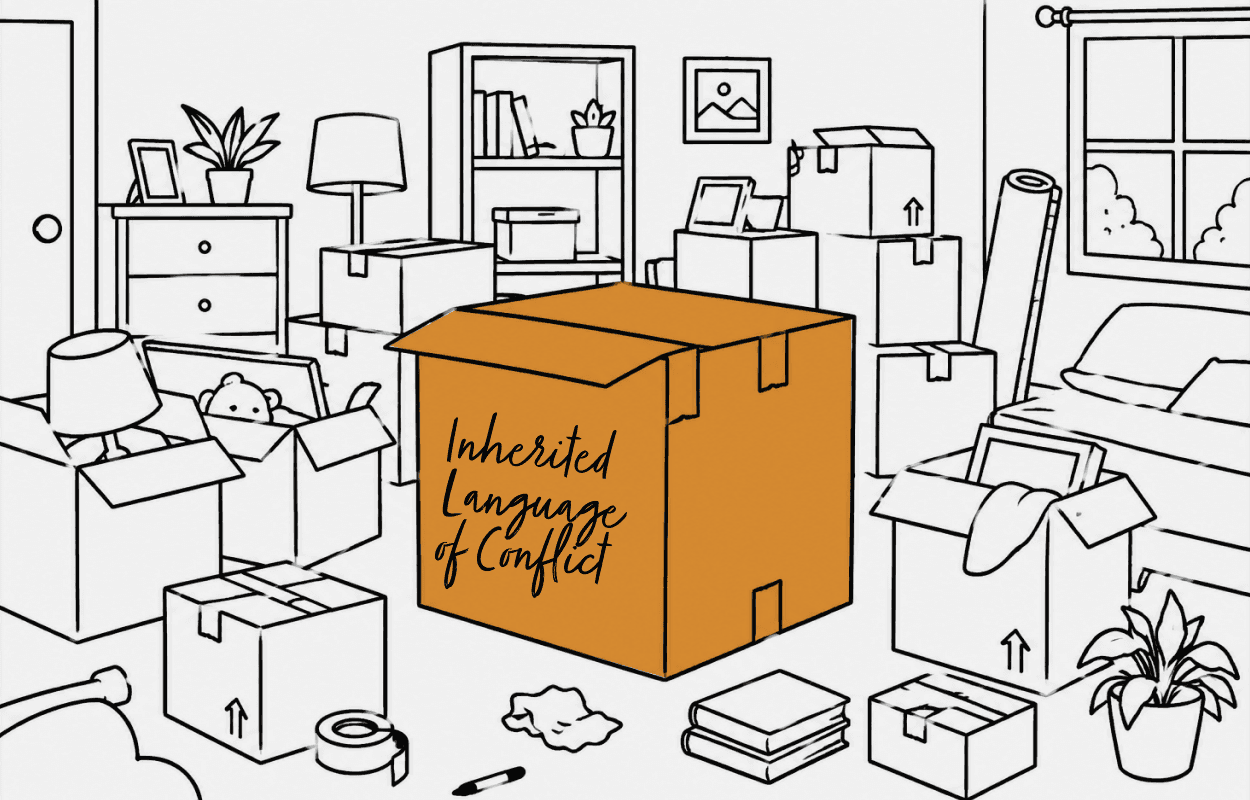
Before we can hope to resolve conflict, we must first unpack the inherited language we use to navigate it.
Tracing the roots
Although my parents are different in many ways—starting with their origin story—they share similar vulnerabilities. In 1947, the year of the partition of India and when my father was born, his family fled from Pakistan. Along with his first breath he was surrounded by violence and the anxieties of a mother leaving everything behind. As an adult, my father decided to leave all that he had come to know and head for Canada. With the promise of a new, better life, he immigrated, only to discover upon landing that a brown, Sikh turban-wearing man could not easily succeed in the promised land. There was little acceptance of him.
On the other side of the world, in Wabush, Labrador—a community of about 3,500 in the 1970s—my mother, at seventeen, left so that she could pursue higher education and escape her life at home. Waiting for her back home was an alcoholic father who chased other women, and a sad, emotionally distant mother coping on Valium—or ‘Mother’s Little Helper,’ as it was known back then. A year and a half later, at eighteen, she dropped out of college shortly after meeting my father one night at a disco. She wanted the happy family life she never had and hoped to create that with him.
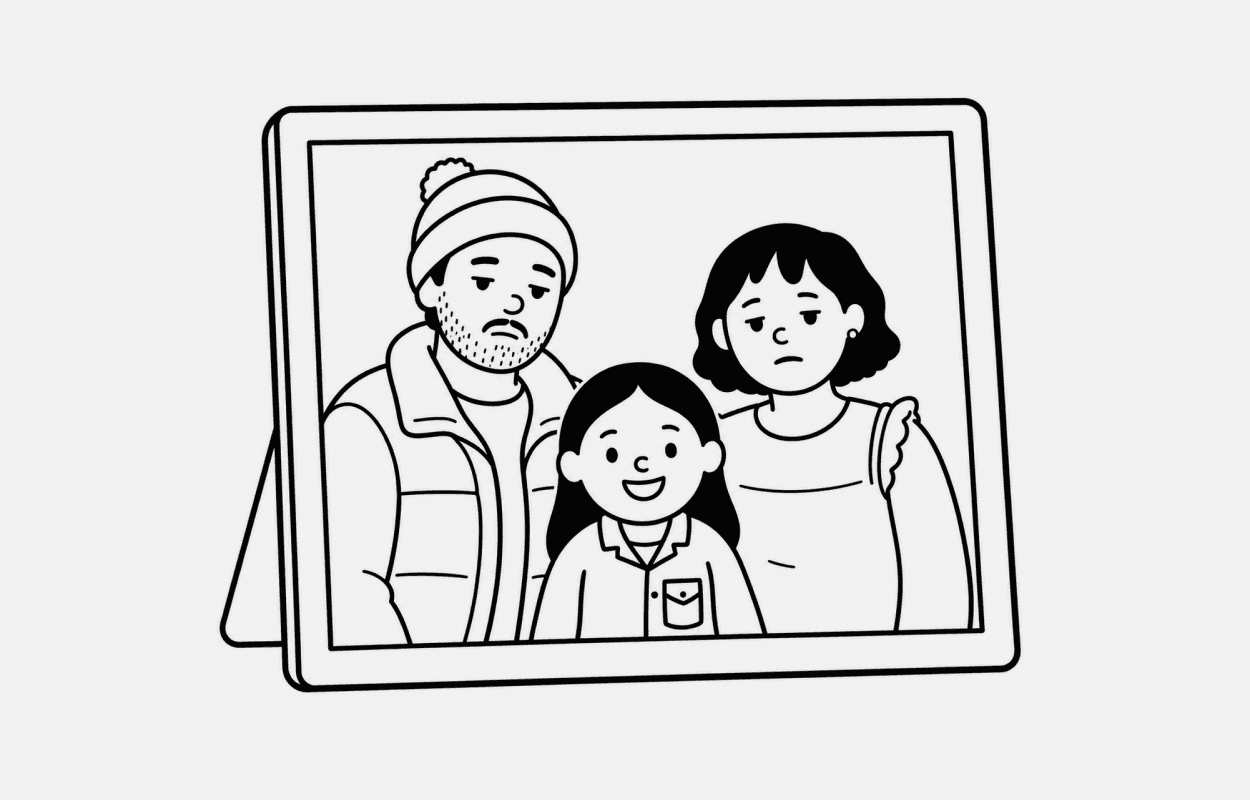
Each bringing their own unique history of survival, they bonded over their trauma.
Together, my parents fostered a chaotic, unstable, and unpredictable environment similar to the ones in which they were raised. Disagreements were resolved by yelling, often with the use of aggressive language. They directed the stress of being poor at each other in explosive ways. When that pressure built up over a few days, like the stress of not being able to cover rent, it culminated in abuse.
Unapologetic resilience
I could see remnants of how they spoke to each other bleeding into how they spoke to other people. Yet outside of their marriage, it was a defence mechanism that served them, and eventually me, when dealing with institutions that didn’t care about us. I remember my mother storming into my elementary school to tell my teacher that it was her responsibility to make sure I had the extra support I needed to succeed. After I received bad grades and was told at a parent-teacher meeting that I didn’t have the aptitude for school, my mother had no issue making it known that her kid, as the only poor brown kid in the school, would not be falling through the cracks. In her fierce, blunt tone, she demanded and got exactly what I needed, which was for my teacher not to overlook or undermine my potential.
My earliest memories of my mother are of her sitting me down to say, “You better make sure to set people straight or you’ll live your entire life at the mercy of what other people say is true.” As a kid barely making it through school, this kind of resilience became my lifeline.
My dad became a clever entrepreneur. He did what most people with his background and resources would have felt too defeated to attempt. He managed to make himself known in a few circles and sell what he could. When that became limited, he would garner business by knocking on doors, even in the middle of a freezing Québec winter, telling people, in the few French words he picked up, exactly what they needed—and what they needed was always what he sold.
The double-edged sword
Being loud and direct was how I learned to communicate, if I wanted to be heard, advocate for myself, and be taken seriously. It was this communication style that opened doors for me when everything else felt closed. It carried me through failing Grade One all the way to graduating at the top of my class in high school. It got me through working while studying and paying for the law entrance exam, eventually leading to my law degree. Time and again, that unapologetic way of speaking got me exactly what I needed, and what I needed most was to escape poverty.
Driven by this mindset, I learned to face barriers boldly. For example, after an unsuccessful interview right out of law school—which left me with an empty student line of credit and just a few hundred dollars on my credit card—I didn’t feel defeated; instead, I understood that I had simply missed some insight into what these interviewers were actually looking for. It was this momentum that led me to track down the resources to get where I wanted to go. I would call around, asking for help from strangers in order to learn how to be better prepared. In a matter of hours, I would go from feeling intimidated about a process to tackling it by breaking it down. I knew that even if I was dealt a specific deck of cards, I could always accumulate more, I just needed to learn how.
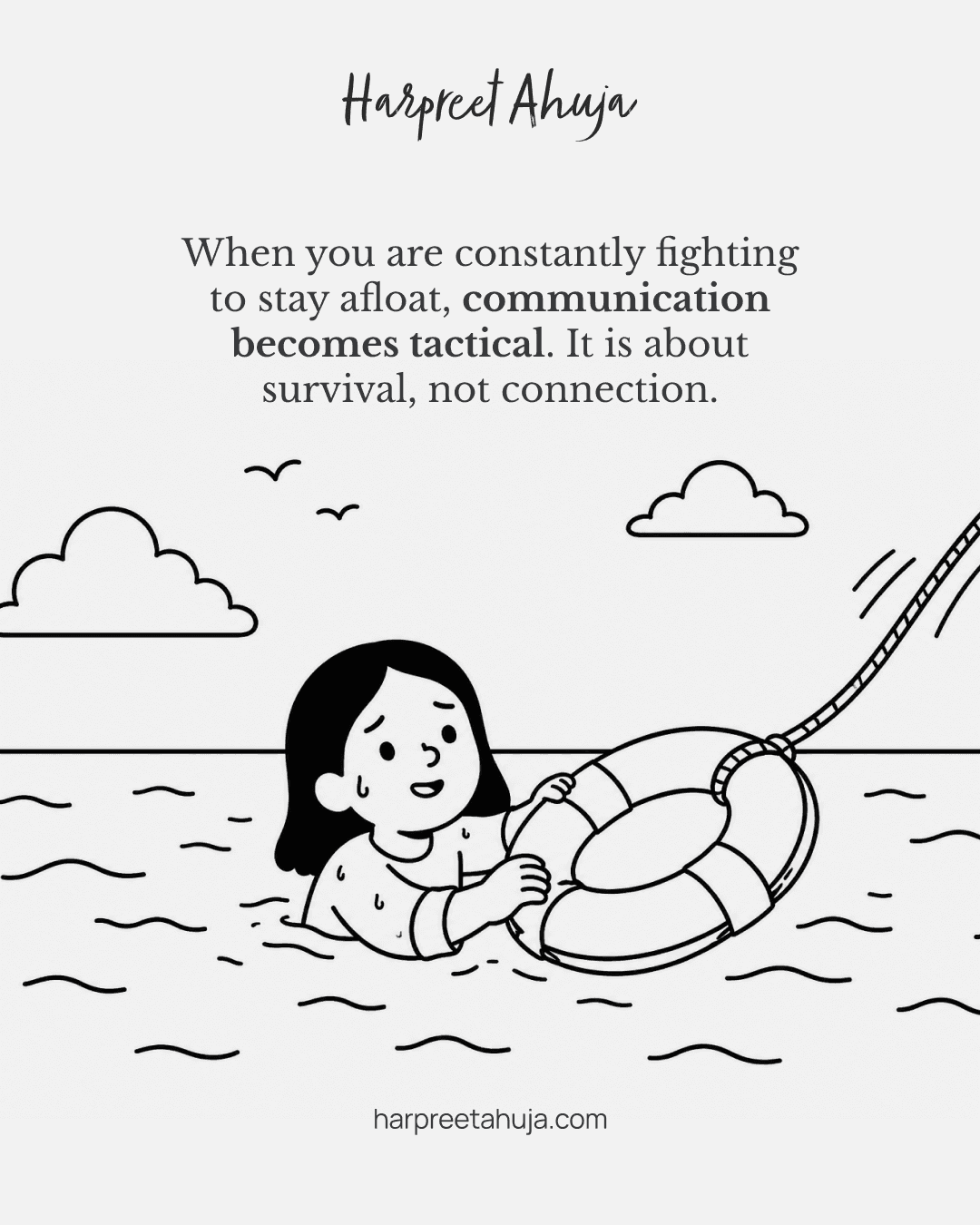
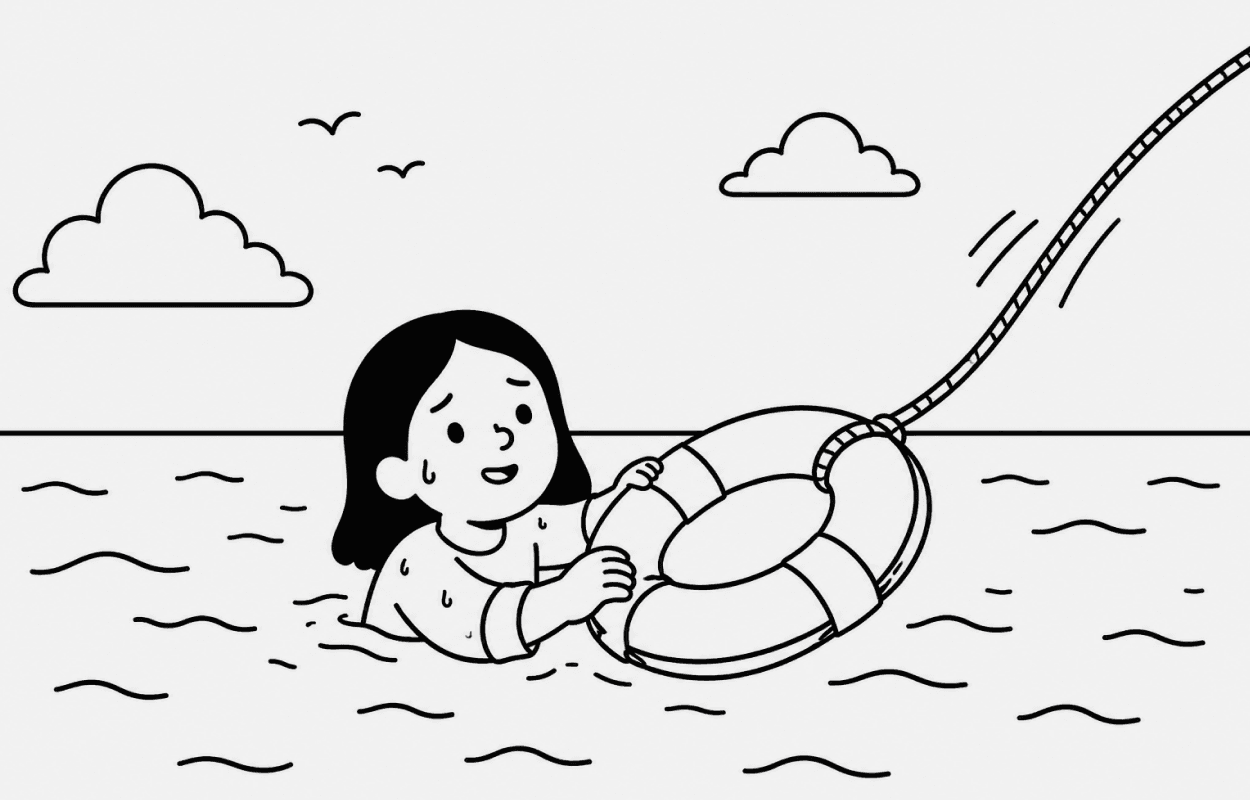
When you are constantly fighting to stay afloat, communication becomes tactical—it’s about survival, not connection
But this communication style, which shaped my personality, also prevented relationships from flourishing, and at times, destroyed them. The intense energy that pushed boundaries and secured my success failed me in my personal life. I didn't understand why my honesty wasn’t always well-received. Living in survival mode meant I had to keep going, leaving me with limited capacity to think about anything else. When you are constantly fighting to stay afloat, communication becomes tactical—it’s about survival, not connection.
Softening the edge
That constant sense of urgency leaves very little room for reciprocity in relationships. Breaking that cycle required a shift in perspective: it was about understanding how to meet someone where they were, without diminishing or excusing their hurtful or offensive behaviour. Rather than entering a dialogue with a rattle, I learned to take a step back to assess the type of relationship I had with this person—whether we were acquaintances, friends, or family—and gauge their capacity or willingness to receive feedback. If I took the time to truly know someone, I could begin to decipher their inherited language as well.
In those moments, I remind myself that honesty and care can go hand in hand: I can still honour my needs while being attuned to the weight of my words
Take Leah, a friend of mine. We are familiar with each other’s family backgrounds, although we tend not to delve too deeply. Instead, our connection and conversations center on access to justice and our passion for grassroots initiatives. While we share similar values, we often disagree on the way forward and find ourselves in heated moments where debate could easily spiral into conflict. The language I inherited would have driven me to correct Leah rather than remain fully open to her viewpoint. This learned habit of shutting down debate by dominating it is precisely how my default setting takes over. By being aware of my pattern, I’ve learned to protect our connection, remembering that ultimately, we want the same thing—to live in a world with less suffering. In those moments, I remind myself that honesty and care can go hand in hand: I can still honour my needs while being attuned to the weight of my words.
Beyond the default
It is not that the language passed down to me is bad or wrong. In fact, I am grateful for it, because it has brought me to where I am today. Rather it is about knowing the limitations and the suitability of that language in different contexts.
Being conscious of when I am using my inherited language requires that I pause in moments of highest frustration and ask: Is this the right tool for the relationship in front of me right now?
Before communication can foster connection, or debate can happen without conflict, we must unpack the language we inherited.
Meet Harpreet: Harpreet Ahuja is a lawyer, human rights consultant, and social justice advocate driven by the conviction that systems need reimagining. Her work explores the intersection of law, policy, and lived experience—and tells the human stories behind injustice. Harpreet is based in Vancouver on the traditional, ancestral and unceded territories of the xʷməθkʷəy̓əm (Musqueam), Sḵwx̱wú7mesh (Squamish), and səlilwətaɬ (Tsleil-Waututh) Nations, and publishes on her website.